Posts Tagged ‘health’

The Complexity of Healthcare

June 14, 2013

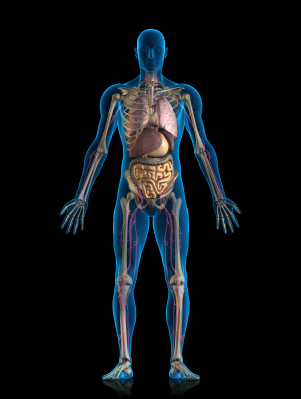
Internal organs

The human body is extremely complex. I believe that any comment or approach that implies otherwise is naïve and an insult to the Creator. I have been treating people for over 30 years and I think I’m less confident now in giving patients a prognosis than I was in the beginning. That’s because I’ve found that people are very unpredictable. We’re not machines produced on an assembly line. Each of us is a unique individual. What’s normal for one person may not be for another. There is a saying that goes something like this: if all you have is a hammer, then you see every issue as a nail. It’s that way in healthcare. If you’re a surgeon, you’re far more likely to recommend surgery. That can be motivated somewhat by greed, but in all fairness, it’s natural to look first for a solution that you typically work with. Someone who isn’t involved with surgery is more likely to consider it a last resort. As a chiropractor, I see many health problems as being related to nerve interference secondary to vertebral subluxations (spine out of alignment). Most of the time, I’m proven right, but I realize that’s usually not the complete picture. Health problems generally have many facets to them.

There is frequently a temptation to oversimplify. We get one or two clues about a possible condition and suddenly we think we know all about it. Non-professional friends and relatives are quick to give you a diagnosis and give you a suggestion for how to manage it. Even professionals may do the same thing. Have you ever gone to the doctor with four different problems and walked out with four different prescriptions? That happened to me a few years ago. I was taught to look at the whole picture before offering a diagnosis, which is the basis of the prescribed treatment. So I wanted to see what my medical doctor would say about some issues that I was having at the time. So I gave him a list of my symptoms. Instead of looking at the bigger picture to see how the symptoms fit together so he could have a good understanding of what was going with me, he looked at each symptom separately and prescribed treatment for each one.

When I was in chiropractic college, which is similar to medical school in many ways, I was always amazed at the number of physiological principles that were not totally understood. It’s important to understand that, in spite of all the fancy instruments, scientific studies and research, healthcare is more art than science. There’s a helpful article about the problems with research entitled “That Study Is Wrong: The Truth About Research”. In actual practice, there is not a great deal of precision. We should certainly strive for greater precision and the ability to duplicate positive results. However, it’s important to understand that it’s not an exact science. That’s why a little inspiration and intuition can be so helpful.

I am constantly amazed at the functioning of the human body. (I realize this all applies to animals also, but the human body is what I work with.) It’s not only a highly coordinated system of many thousands of intricate chemical and electrical processes, but when you add in the mind, the spirit, the electromagnetic fields and so forth, it’s totally astounding! (And to think that all of that came about by accidents of nature! [yeah, right]) I’ve seen lots of people who talk about their body as if it were some old piece of machinery held together by bubble gum and baling wire and that anything they can do to it would be an improvement. That simply is not true. I have great respect for the body. I rely on treatment methods that work in conjunction with the wisdom of the body, rather than fighting against it. There are many drugs (pharmaceuticals) out there that are necessary. However, many drugs are designed to “trick” the body, to make it think that internal conditions are different than what they really are so that we can get it to provide a desired physiological response. The problem is that the body is far smarter than the doctor, not the other way around. So you need to be very careful taking that kind of control into your own hands!

I firmly believe that our bodies were designed by an all-knowing, loving Creator. Our bodies have great wisdom. For the most part, if we remove interference and give them what they need (physically, chemically, emotionally, etc.), then all we need to do is get out of the way and let them function as they were created to do.

Moon, Stars & New Paradigms

June 6, 2013

moonstarsI recently got to look at the full moon through a telescope. It was so amazing. I’ve seen detailed pictures of the moon, but this was very different looking at it myself. What was so astounding to me was the fact that I was seeing something that I had seen thousands of time, and yet I never saw it like this. It was like seeing it for the very first time.

There’s another astronomical fact that causes me deep reflection. When I look up at the night sky, whether through a telescope or just the naked eye, I realize that I’m not seeing how the stars are, but how they WERE. The closest stars are 4-6 light years away. Most of them that we see are much further away. What that means is when you look up at the stars, you’re actually seeing the past. You’re seeing the stars as they were several years ago. While it’s very cool to actually be able to witness the past, it’s also a little disturbing that I cannot see the stars as they are right now. Astronomers can come up with extremely powerful telescopes, but even they cannot see what’s happening in the distant cosmos right now.

I used to put a lot of faith in science and research. It seems like the older I get, the less faith I have in it. Research, even the highly respected double-blind studies, can be biased, results can be manipulated or misinterpreted, and so forth. Even when research is done very carefully and without bias or agenda, we can be limited by our senses, our degree of understanding, and the methods used in gathering data. I’m definitely not saying that we should do away with science. Quite the contrary. However, we just need to recognize its limitations. Many people have set aside religion in favor of science. But then they treat science as if it were a religion. To be scientifically minded is to be open minded, not clinging to dogma or preconceived notions of how the universe operates.

As I progressed in my practice as a chiropractor, over the years, I realized that body, mind and spirit all work together. I needed to learn to see things in new ways. I didn’t have to set aside the scientific model that I had been clinging to. I just had to open up its boundaries to allow new ideas in. I had to realize that the way I was looking at the human body didn’t tell the whole story. As I opened up my mind to new ways of gathering information, including tapping into the storehouse of data contained in the subconscious mind, I was able to accomplish much more with my treatment and help people with a broader range of problems.

The Power of Hope

May 30, 2013

hopeMy father died of brain cancer when he was only 55 years old. It was a tragic event for our family. I wished I could have done more to help him. I was just barely starting chiropractic college at the time. Even if I would have had all the training and experience that I have now, it was unlikely that I could have saved him, but I would have given it my all in trying. The approach of the medical doctors really bothered me. I know they would have also saved him if they could, and I realize that they were being honest with him. However, they robbed him of a crucial element of healing — hope. They told him that he would definitely die. In fact, the treatment that they put him through, which left him sick and bald, was, as the doctors put it, for research purposes only. By giving him a definitive prognosis like that, they essentially declared a death sentence. Every prognosis is nothing more than an educated guess. No doctor can absolutely predict the future. There should always be a balance between best guess and positive thinking.

I once heard of a lady who had some routine lab work done. The results the doctor got back for her indicated that she had a fatal condition and so he gave her only a few months to live. The lady believed him, got all of her affairs in order, and sure enough, in a few months, she passed away. Shortly thereafter, it was discovered that the lab had mixed up her results with someone else’s and that there was in fact nothing wrong with this lady. She died simply because she believed she would. She had lost hope.

On the other hand, I’ve heard of many people who were given only a short time to live, but they refused to give up. So years later, they were still alive and kicking. What you believe about your health, as well as the faith you place in things you are doing to preserve your health, will definitely have an impact on how healthy (or sick) you really are. One of the things that I never tell patients is that they just have to learn to live with their condition. It doesn’t mean that I will be able to help everyone and give them the relief they’re seeking, but that doesn’t mean that no one can. I believe it’s the height of arrogance for doctors to take the attitude that if they can’t help a certain patient with a particular problem, that a solution doesn’t exist. I tell my patients that although I can’t make specific promises as to how well they will progress under my care, I will always hope for and strive for the best. Because I don’t put limitations on the potential benefits of my treatment, I do sometimes witness miracles.

Certainly it’s unethical for any kind of doctor to make promises that he or she knows will not come to pass, whether it’s to make a buck or to build up his or her ego or just to make the patient feel better about the situation. However, no doctor has the right to rob someone of hope or to place limits on the patient’s ability to heal.