The Trouble with Time

June 21, 2013

impatient manThey say that good things come to those who wait. I’m not sure I believe that since sitting around waiting usually doesn’t accomplish much. However, most good things do take time. In our hurry-up, get-it-now, no-waiting, fast paced world, it’s easy for us to get in a mindset of instant gratification. We expect to see results immediately, and if we don’t, we assume that the results aren’t what we were looking for.

When I was attending chiropractic college, I worked part-time as a smoking and weight therapist. Among other things, we taught people about why smoking is so addictive. Outside of the chemical addiction to nicotine, there is a strong psychological addiction due to the way in which smoking affects the body and makes you feel. Smoking can be both relaxing and stimulating simultaneously, both of which occur quickly, while you are still in contact with the cigarette. Other effects, such as anxiousness and fatigue, which are just as attributable to the tobacco as the previous effects, take a little longer, after the cigarette has been extinguished. Therefore, the mind gets programmed over and over that “when I am in the process of smoking, I feel good… when I am not smoking, I feel bad”. Get that into your mind a thousand times over and no wonder it’s a hard habit to break.

There are a lot of things in life that are somewhat like a tobacco addiction. Although we are blessed with the ability to reason and to look beyond the immediate situation, we are too often not much different from single-celled creatures – drawn toward pleasure, repelled by pain. Without conscious thought and determined purpose, we drift toward whatever feels good at the moment. However, since we are able to reason, when we take the time and effort to use our God-given intelligence, we can see beyond the moment and examine the consequences of our decisions. Therefore, we can exercise, knowing that it will give us strength and energy, although at the moment we feel more weak and tired. We can say no to that cinnamon roll that’s calling our name because we know that we’ll be healthier in the long run if we don’t give into that temptation.

Imagine a gardener plucking seeds back out of the ground or abandoning the garden simply because there was no harvest within a week of planting. Time itself accomplishes nothing. However, time is an important factor in virtually every process. We understand that. However, in life, it’s not always very straight-forward. Every time we try something new or change the way we do things, when we don’t see immediate results, we’re left to wonder whether we’re on the wrong path or if we just need to give it more time. The gardener knows approximately how long it takes for sprouts to appear. He doesn’t worry about it unless it goes significantly past a certain amount of time. However, in most new situations in life, we have no idea how long is too long. Healthcare is a lot like that. People get used to taking drugs where they often feel an almost immediate difference. So when they start taking nutritional supplements and don’t feel any difference for two weeks or more, they wonder if the supplements are doing anything. I’ll sometimes have people come in for treatment and if they don’t feel major changes in one or two visits, they feel like they’re wasting their time and money. Natural health takes time. Proper effort and patience will pay big dividends in the long run.

To sum it up, time does not heal anything. Only healing processes heal. However, all processes take time. Use your knowledge, intuition and inspiration to know what paths to follow in all aspects of your life. Then follow through, stick with it and give it sufficient time to allow natural processes to do their job and bring you the health, happiness and success that you seek.
The Complexity of Healthcare

June 14, 2013

Internal organs

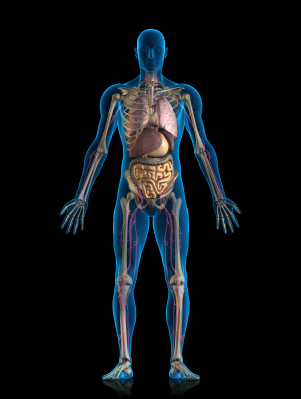
The human body is extremely complex. I believe that any comment or approach that implies otherwise is naïve and an insult to the Creator. I have been treating people for over 30 years and I think I’m less confident now in giving patients a prognosis than I was in the beginning. That’s because I’ve found that people are very unpredictable. We’re not machines produced on an assembly line. Each of us is a unique individual. What’s normal for one person may not be for another. There is a saying that goes something like this: if all you have is a hammer, then you see every issue as a nail. It’s that way in healthcare. If you’re a surgeon, you’re far more likely to recommend surgery. That can be motivated somewhat by greed, but in all fairness, it’s natural to look first for a solution that you typically work with. Someone who isn’t involved with surgery is more likely to consider it a last resort. As a chiropractor, I see many health problems as being related to nerve interference secondary to vertebral subluxations (spine out of alignment). Most of the time, I’m proven right, but I realize that’s usually not the complete picture. Health problems generally have many facets to them.

There is frequently a temptation to oversimplify. We get one or two clues about a possible condition and suddenly we think we know all about it. Non-professional friends and relatives are quick to give you a diagnosis and give you a suggestion for how to manage it. Even professionals may do the same thing. Have you ever gone to the doctor with four different problems and walked out with four different prescriptions? That happened to me a few years ago. I was taught to look at the whole picture before offering a diagnosis, which is the basis of the prescribed treatment. So I wanted to see what my medical doctor would say about some issues that I was having at the time. So I gave him a list of my symptoms. Instead of looking at the bigger picture to see how the symptoms fit together so he could have a good understanding of what was going with me, he looked at each symptom separately and prescribed treatment for each one.

When I was in chiropractic college, which is similar to medical school in many ways, I was always amazed at the number of physiological principles that were not totally understood. It’s important to understand that, in spite of all the fancy instruments, scientific studies and research, healthcare is more art than science. There’s a helpful article about the problems with research entitled “That Study Is Wrong: The Truth About Research”. In actual practice, there is not a great deal of precision. We should certainly strive for greater precision and the ability to duplicate positive results. However, it’s important to understand that it’s not an exact science. That’s why a little inspiration and intuition can be so helpful.

I am constantly amazed at the functioning of the human body. (I realize this all applies to animals also, but the human body is what I work with.) It’s not only a highly coordinated system of many thousands of intricate chemical and electrical processes, but when you add in the mind, the spirit, the electromagnetic fields and so forth, it’s totally astounding! (And to think that all of that came about by accidents of nature! [yeah, right]) I’ve seen lots of people who talk about their body as if it were some old piece of machinery held together by bubble gum and baling wire and that anything they can do to it would be an improvement. That simply is not true. I have great respect for the body. I rely on treatment methods that work in conjunction with the wisdom of the body, rather than fighting against it. There are many drugs (pharmaceuticals) out there that are necessary. However, many drugs are designed to “trick” the body, to make it think that internal conditions are different than what they really are so that we can get it to provide a desired physiological response. The problem is that the body is far smarter than the doctor, not the other way around. So you need to be very careful taking that kind of control into your own hands!

I firmly believe that our bodies were designed by an all-knowing, loving Creator. Our bodies have great wisdom. For the most part, if we remove interference and give them what they need (physically, chemically, emotionally, etc.), then all we need to do is get out of the way and let them function as they were created to do.

Moon, Stars & New Paradigms

June 6, 2013

moonstarsI recently got to look at the full moon through a telescope. It was so amazing. I’ve seen detailed pictures of the moon, but this was very different looking at it myself. What was so astounding to me was the fact that I was seeing something that I had seen thousands of time, and yet I never saw it like this. It was like seeing it for the very first time.

There’s another astronomical fact that causes me deep reflection. When I look up at the night sky, whether through a telescope or just the naked eye, I realize that I’m not seeing how the stars are, but how they WERE. The closest stars are 4-6 light years away. Most of them that we see are much further away. What that means is when you look up at the stars, you’re actually seeing the past. You’re seeing the stars as they were several years ago. While it’s very cool to actually be able to witness the past, it’s also a little disturbing that I cannot see the stars as they are right now. Astronomers can come up with extremely powerful telescopes, but even they cannot see what’s happening in the distant cosmos right now.

I used to put a lot of faith in science and research. It seems like the older I get, the less faith I have in it. Research, even the highly respected double-blind studies, can be biased, results can be manipulated or misinterpreted, and so forth. Even when research is done very carefully and without bias or agenda, we can be limited by our senses, our degree of understanding, and the methods used in gathering data. I’m definitely not saying that we should do away with science. Quite the contrary. However, we just need to recognize its limitations. Many people have set aside religion in favor of science. But then they treat science as if it were a religion. To be scientifically minded is to be open minded, not clinging to dogma or preconceived notions of how the universe operates.

As I progressed in my practice as a chiropractor, over the years, I realized that body, mind and spirit all work together. I needed to learn to see things in new ways. I didn’t have to set aside the scientific model that I had been clinging to. I just had to open up its boundaries to allow new ideas in. I had to realize that the way I was looking at the human body didn’t tell the whole story. As I opened up my mind to new ways of gathering information, including tapping into the storehouse of data contained in the subconscious mind, I was able to accomplish much more with my treatment and help people with a broader range of problems.

The Power of Hope

May 30, 2013

hopeMy father died of brain cancer when he was only 55 years old. It was a tragic event for our family. I wished I could have done more to help him. I was just barely starting chiropractic college at the time. Even if I would have had all the training and experience that I have now, it was unlikely that I could have saved him, but I would have given it my all in trying. The approach of the medical doctors really bothered me. I know they would have also saved him if they could, and I realize that they were being honest with him. However, they robbed him of a crucial element of healing — hope. They told him that he would definitely die. In fact, the treatment that they put him through, which left him sick and bald, was, as the doctors put it, for research purposes only. By giving him a definitive prognosis like that, they essentially declared a death sentence. Every prognosis is nothing more than an educated guess. No doctor can absolutely predict the future. There should always be a balance between best guess and positive thinking.

I once heard of a lady who had some routine lab work done. The results the doctor got back for her indicated that she had a fatal condition and so he gave her only a few months to live. The lady believed him, got all of her affairs in order, and sure enough, in a few months, she passed away. Shortly thereafter, it was discovered that the lab had mixed up her results with someone else’s and that there was in fact nothing wrong with this lady. She died simply because she believed she would. She had lost hope.

On the other hand, I’ve heard of many people who were given only a short time to live, but they refused to give up. So years later, they were still alive and kicking. What you believe about your health, as well as the faith you place in things you are doing to preserve your health, will definitely have an impact on how healthy (or sick) you really are. One of the things that I never tell patients is that they just have to learn to live with their condition. It doesn’t mean that I will be able to help everyone and give them the relief they’re seeking, but that doesn’t mean that no one can. I believe it’s the height of arrogance for doctors to take the attitude that if they can’t help a certain patient with a particular problem, that a solution doesn’t exist. I tell my patients that although I can’t make specific promises as to how well they will progress under my care, I will always hope for and strive for the best. Because I don’t put limitations on the potential benefits of my treatment, I do sometimes witness miracles.

Certainly it’s unethical for any kind of doctor to make promises that he or she knows will not come to pass, whether it’s to make a buck or to build up his or her ego or just to make the patient feel better about the situation. However, no doctor has the right to rob someone of hope or to place limits on the patient’s ability to heal.

Reflections on Weirdness in Healthcare

October 21, 2011

When it comes to acceptance of new ideas in healthcare philosophy and approaches, I believe there are 3 kinds of people in the world.

The first type is the ultra-open-minded. These are people with seemingly no skepticism or critical thinking. If it’s mainstream, they reject it as being outdated or the outcome of conspiracies of wealthy businessmen (both of which may be true in many cases, but should not be automatically assumed). If it’s strange and mystical, they are quickly drawn to it and may sometimes become ardent supporters and devotees with only a modicum of evidence. The weirder, the better. Some may consider those belonging to this group to be gullible and/or rebellious.

The second type is the very closed-minded people. These are the ones who won’t consider anything that hasn’t been extensively researched and proven by trusted sources. If you’re a conservative critical thinker, at first glance, that sounds perfectly right. So what’s wrong with this attitude? First, there are many philosophies that have merit. Whether right or wrong, the philosophy will influence the way you look at life and health. To say that your approach is the only valid one is to shut out a world of other possibilities. It creates an attitude of arrogance that cheats you out of many things that could be helpful. To many closed-minded people, anyone who does not think as they do must, by default, belong to the first group, the “gullibles”. For instance, our current system of medicine has evolved mostly over the last couple of centuries. Qi Gong, the ancient Chinese healthcare system involving the manipulation of energy, has been around for over 5000 years. Yet it’s mostly rejected by western medicine. I’m not proposing that we abandon all that we’ve learned in modern times and return to the “old ways”, but is it wise to assume that for 5 millenia people have been duped into thinking this method of healthcare had some merit when indeed it had none? There must be something to it or it would have been abandoned many centuries ago. So to dismiss it without even investigating it is not reasonable.

These first two types of people represent extremes in thinking — one extremely open, one extremely closed. I have found in my life that extremes of thought are often incorrect. Life isn’t so simple that you can assume something is correct or incorrect due to its seeming weirdness. It is my contention that the best way to be is skeptical but receptive. This third type, which I would hope most people fit into, views everything with a critical eye, but does not assume that it’s right or wrong before examining the facts. This person will base their beliefs on evidence and personal findings rather than just going by what someone says. But even if they cannot prove or disprove something, they understand that there is more truth out there than what can be immediately understood. They respect the viewpoints of others knowing that their approach is not the only valid possibility. They realize that there is far more “out there” than one person can have full knowledge of or comprehend. Because of that, when their journey through life places them in a situation where they are introduced to a new idea, they can examine it critically and see if it has merit for them. If it does, they may choose to embrace it and make it part of their reality, or they may choose to respectfully decline it or put it on the shelf to be incorporated later. They may also find, after examining it carefully, that it does not have value to them and so they reject it, still realizing that it could have merit for someone else.

This is not to say that we should try everything to see if it has any validity. I don’t need to use heroin to decide if it’s healthy for me. Nor am I saying that in regards to religion, we should just stick with agnosticism and say that truth doesn’t really exist. But in regards to healthcare, we should understand that a variety of disciplines exist. For most of my 28 years as a chiropractor, I have stuck with the more conservative techniques. Many medical doctors would have considered me to be like the first type of individual, whereas many people practicing alternative forms of healing could have thought of me as more the second type. For the past year or so, I’ve been becoming more and more open-minded, while still taking care to not embrace everything in a gullible fashion. This transition was outlined in my previous blog entitled “The Journey of the Hesitant Healer”. Having learned through many years of experience that you cannot separate body, mind and spirit while being an effective healer, I have broadened the scope of my practice to include other techniques, mostly dealing with energy medicine, that I find to be helpful for many individuals.

The One Reason for Failed Weight Loss

September 2, 2011

I’ve written a number of small articles on various aspects of how to lose weight naturally. Now I’d like to just approach it generally. There are many weight loss programs out there. Many of them are very good and work for many people. However, most of the advertisements that I see that show fantastic results include a disclaimer that says that these results are not typical or that results vary. It seems like there are some people that can do any kind of program and get the weight off and keep it off. Then there are some people for whom no program works. Even if they stick to the program faithfully, the weight does not come off or they get very little response. For many people, they can get the weight off, but then the weight gradually comes back. Even expensive and dangerous weight loss surgery often ends with the patient putting the weight back on. When it comes right down to it, there is only one reason why weight loss programs fail. The basic reason that weight programs fail to get the weight off or keep it off is that the underlying causes for the excess weight were not discovered and corrected.

This is a simple statement, but of course the actual solution is seldom simple. Also it’s different for everyone. I sometimes hear about some fantastic weight loss idea that helps many people lose weight. In reality, no one has come up with a simple solution that works for everyone. All valid weight loss programs work for some people, but I haven’t seen one yet that works for every person. That’s because we’re all unique individuals. When someone happens to find the solution that matches up with their particular issues, bingo!, they’re the poster child for that program, telling everyone that “if I can do it, anyone can do it”.

If you’ve never struggled with weight loss, you may be thinking, “just eat less and exercise more, dummy!”. I work with people all the time who eat less, eat better foods and exercise more than most skinny people I know. I have some patients who have stuck faithfully with a variety of weight loss programs only to wind up with disappointment. Frequently there is not any kind of eating disorder and even if there is, there has to be some reason behind it.

I believe that much of the problem, from a psychological standpoint, stems from the workings of the subconscious mind. That’s the part of our mind that is not part of our conscious thoughts, that remembers everything, that doesn’t use logic and reason like the conscious mind, but operates by emotions. Despite your desire to look better, be healthier and your understanding that you really ought to weigh less, your subconscious mind may have a different agenda. It may be operating in survival mode — responding to traces of deep emotions left over from traumas that your psyche has had to deal with, especially from childhood.

I don’t want to get into a lot of what might be the possible issues in this blog. There are many possible reasons for excess weight, both physiological and psychological. The point is that it’s a complex issue for many people. And if they don’t follow that one rule of finding the underlying causes for the excess weight, their efforts to lose weight will generally end in frustration and disappointment, which then adds to their reasons for gaining weight. It’s important to find out WHY your body has put on those extra pounds. If the reasons seem obvious to you, make the necessary changes to get back to a healthy weight. If the changes didn’t work for you and you’re left scratching your head wondering why or if you were unable to get yourself to make the changes, contact me or visit a natural healthcare practitioner in your area who works with finding underlying physical and psychological reasons for excess weight. And always keep in mind, although obesity is a cause of many health problems, it’s also a symptom of what’s going on inside. No matter how badly you need to lose weight, it’s still more of a health problem than a weight problem.

The Great Debate: Sugar vs. Artificial Sweeteners

July 22, 2011

If you’re both weight conscious and health conscious, the question may have come up, as it has for many people, if I want something sweet, which is better, sugar or artificial sweeteners? To a large extent, in our society, sugar has been made the bad guy. As I was growing up, everything was loaded with sugar. People didn’t think much about it, but now many of us are paying the price for it. As people realized that sugar can make us fat and sick, but not wanting to give up the desire for sweet flavors, we turned to artificial sweeteners. Now we’re finding those aren’t such a good choice either. I’ve seen many sweeteners come and go. One will emerge as a safe alternative to sugar, and then we find out that it’s not so healthy after all. So we turn to something else, until we find out how bad it is.

In early days, sugar was not as easy to come by. Our pioneer ancestors had sugar, but it usually came in the form of a brick that you had to work to get a chunk of. The human body is well-equipped to deal with carbohydrates. In small amounts, it can even deal with highly refined sugar. However, it was never designed to have frequent large amounts of it, which cause huge spikes in our blood sugar and wear out both our pancreas and the insulin receptors on our cells.

Our bodies are also not designed to deal effectively with artificial sweeteners, which we would generally classify as chemicals. Let’s take a look at some of these:

Saccharin – I grew up around this one. However, in the 1970’s, it was linked to cancer and thereafter taken off the shelves. The FDA has since decided that it’s not so bad and has lifted its ban. I still don’t really trust it. Besides, it doesn’t taste good anyway.

Cyclamates – This one seemed to come and go fairly quickly. It was linked to chronic toxicity and even implicated in the saccharin/cancer controversy. It is legally used in 55 countries, but not the United States.

Aspartame (Equal, NutraSweet) – “The safety of aspartame has been the subject of several political and medical controversies, congressional hearings and internet hoaxes since its initial approval for use in food products by the U.S. Food and Drug Administration (FDA) in 1974.” (Wikipedia) It is a dietary excitotoxin, which can cause pain and trigger flare-ups in people prone to fibromyalgia. Excitotoxins can also make you think you’re hungry when you’re not, causing you to eat more. It is also implicated in fluid retention. So, although the FDA has declared it safe for consumption and it provides sweetness without calories, it could actually contribute to obesity.

Sucralose (Splenda) – This is an extremely sweet chemical sweetener (about 600 times sweeter than sugar). It can also cause you to retain fluid. Many people have some degree of sensitivity to it. Sucralose can cause one to suffer from sluggishness, fatigue, make legs feel like lead weights, mood swings, severe cramps (female), intense pain, painful bowel movements, bloating, dizziness, confusion, and more. As advertised, sucralose starts off as sugar, but then it’s bound to chlorine atoms. The problem is that chlorine reacts with organic material to create chlorination by-products (CBPs) that can trigger chronic symptoms like fatigue, headaches and brain fog, as well as reproductive and immune problems. Sucralose has no calories, but there are sometimes a few calories in the fillers (maltodextrin, etc.) that are often used. In spite of FDA approval and a great deal of usage, I don’t believe it’s been sufficiently studied.

Stevia – This is a naturally occurring substance that’s much sweeter than sugar. A 1985 study indicated that it may cause genetic mutations. However, the World Health Organization has since found that it does not. I don’t yet have much information on it, but as far as I know it’s safe.

Xylitol – This one, although not regular sugar, seems fairly safe. It is actually a sugar alcohol that is found in the fiber of some fruits and vegetables. It’s often used in toothpaste and some chewing gum. It’s not as sweet as sugar and provides less food energy. It’s absorbed more slowly and so it should provide sweetening with less insulin spikes. Don’t go overboard with it though. Although it has fewer calories, it does have about 2/3 the calories of sugar and can have a laxative effect.

So what’s the final answer? Be wary of artificial sweeteners. Do not think that because you’re avoiding sugar, you’re giving yourself a thin, healthy body. Whether you use sugar or sugar substitutes, go easy. If you have strong cravings, see me and we’ll address them.

Fat Burning Rules

June 24, 2011

The following guidelines are not all required in my weight loss system. However, it contains a lot of helpful information. I got these from a highly respected colleague — Dan Murphy, D.C.

  • Do not eat late at night
    • Never eat after dinner
    • Never go to bed with a full stomach
    • Try to finish eating dinner at least 3 hours before bed
    • Try to allow 11-12 hours between dinner and breakfast
  • Do not snack between meals
    • Eat only 3 meals per day
    • Try to allow 5-6 hours between meals; eating 20 grams (.7 oz) of protein minimum with each meal will help one to do this
  • Avoid eating large meals
    • Eat slowly. It takes 20-30 minutes for the leptin signals to turn off the hunger centers of the brain
  • Always eat breakfast, including at least 20 grams (.7 oz) of protein
  • Avoid refined carbohydrates, including sugary drinks (limit juice), all sugary foods, breads, pasta, potatoes, rice
  • Do not consume MSG or aspartame. They damage the brain so that the brain thinks you are hungry and you will eat more food. Remember that MSG has dozens of names on food packaging (see www.truthinlabeling.org).
  • Avoid high-fructose corn syrup. It causes insulin resistance, producing more insulin and increased storage of fat.
  • Do not consume grains because they are carbohydrates.
  • Do not drink alcohol. This includes wine and beer.
  • Keep your stress as low as possible.
  • Eat lots of raw and steamed vegetables, some fruits – especially apples and raw nuts. These fruits are NOT okay because they are high in sugar and low in fiber: bananas, dates, figs, raisins, canned fruit, dried fruit and mangoes.
  • Exercise. A combination of weight training and aerobics is best.
  • Sleep a minimum of 7 hours every night.
  • Avoid abnormal sources of estrogen and estrogen-like compounds:
    • Birth control pills
    • Hormone-replacement therapy
    • Soy based foods
    • Eat organic produce only. If the foods you are eating are not organic fruits, vegetables and meats, you are consuming foods that have been exposed to pesticides, insecticides, antibiotics, herbicides, fungicides and estrogens. All of these stop fat burning and increase fat storage.
    • Plastics that contain the chemicals Bisphenol-A and phthalates. The adverseness of these chemicals is increased by a factor of 55 if the plastic contains hot liquids or is microwaved. Many skin creams, makeup, shampoos and perfumes contain these chemicals and are easily absorbed through the skin.
  • Take the anti-inflammatory dose of fish oil in supplements. This requires 3 grams (3000 mg) per day.
  • Take a multivitamin/mineral supplement every day.

Why We Eat

June 24, 2011

We eat to sustain life, because we’re hungry, right? If only it were that simple, many people would not have so much excess weight. There are many reasons why we eat. We eat because we’re happy and want to celebrate. We eat because we’re sad, depressed, bored, lonely, upset, frustrated, angry, etc., etc. We eat to be social, perhaps because it’s time to eat and our family or friends are eating. We eat because we associate certain activities with eating, such as watching TV, movies, sporting events, etc. Many of these situations are acceptable, but some are not. For instance, some people eat because they’re depressed. They’re depressed because they’re obese. The more they eat, the more obese they become, which leads to more eating, which leads to more depression and so it continues.

In an ideal world, the amount and timing of our eating would correspond perfectly to the actual needs of the body. That is probably not a reasonable expectation. The best solution is to create a healthy balance. We want to eat with our family and friends, but not to excess and not the wrong things. We don’t want to miss out on eating as part of celebrations, but we also don’t want to overdo it. We don’t always have the luxury of eating at times other than scheduled breaks. For the most part, these are all workable.

What do we do when things get out of control and our eating becomes destructive? If you’re like many people, you get angry with yourself, perhaps even hate yourself. When that happens, more destructive behavior ensues. Stop beating yourself up about it. Find out why it happens. Then set goals to work on it little by little. One of the wonderful things about the Ohana Ideal Weight Loss System is that we are addressing some of the underlying reasons for these behaviors, such as trapped emotions, hormone imbalances, etc. It will still require some effort on your part to change the old patterns. However, your treatment should make it easier, helping you ensure long-term success.

General Tips for Weight Loss Program

June 24, 2011
  • Don’t compare yourself to others. You are unique. All that matters is getting from where you are to where you want to be.
  • Eat breakfast, always. Don’t eat within two hours of going to bed.
  • Stay within the program. Don’t cheat. Be sure to record cravings that you have. If you do end up cheating, don’t beat yourself up about it. Just be sure to write it down so we can address it at the next follow-up visit.
  • Stay positive, have faith. Shake off discouragement. Replace the negative thoughts and feelings with upbeat, productive thoughts and feelings, which will be made easier by our removing trapped emotions.
  • Enjoy the program. If it ever feels like torture, that’s something we need to address.
  • Drink plenty of water. There are many reasons to stay hydrated. Don’t confuse hunger with thirst.
  • Avoid fast food, greasy food and soda pop. Where possible, avoid artificial sweeteners.
  • Focus on protein and vegetables.
  • Do not obsess about your current weight. Focus on the program, your health and keeping a positive attitude. This is more about health than what the scale says you weigh. You should only weigh yourself weekly… or better yet, let us do it in your weekly follow-up visit.
  • If you wake up at night and want a snack, just drink water. If you have trouble sleeping or crave food in the middle of the night, notify us and we’ll address it.
  • Setbacks may occur from time to time. This is normal. In fact, they can be helpful since we can use those as opportunities to learn more about your body and how it reacts to various changes. With each follow-up visit, we obtain more information about your body, remove more barriers to weight loss and further prepare you for lasting success.